Sentences are given in the active voice. Change them into the passive voice.
1. He has bought a fiat car.
2. I put down the pen.
3. I saw a hut at a distance.
4. All of them welcomed the suggestion enthusiastically.
5. Most of my friends have watched this movie.
6. The teacher appreciated the boy’s work.
7. Somebody has stolen the bicycle.
8. The police finally caught the notorious thief.
9. The head of the organization will run the project.
10. Firemen miraculously saved the people living on the second and third floors.
https://www.youtube.com/watch?v=gEzamFI4mZI&feature=emb_title
The speaker has taken up numerous hobbies.
The speaker started making clothes when she was a child.
The speaker’s friends are passionate readers of her fashion blog.
The speaker thinks fashion is a rather expensive hobby.
The speaker hopes to build her career in fashion business.
Why did the head teacher introduce changes in the timetable?
What does a “flexible day” mean for these teenage students?
Why do the students start school early on Friday?
What has changed since the introduction of a “flexible day’”?
Who was against the experiment?
it’s a cheap and effective way to protect roads from ice due to a simple scientific principle: freezing point depression of solutions. The freezing point of pure water, the temperature at which it becomes ice, is 32 degrees Fahrenheit. So if there’s snow, sleet or freezing rain and the ground is 32 F or colder, solid ice will form on streets and sidewalks.
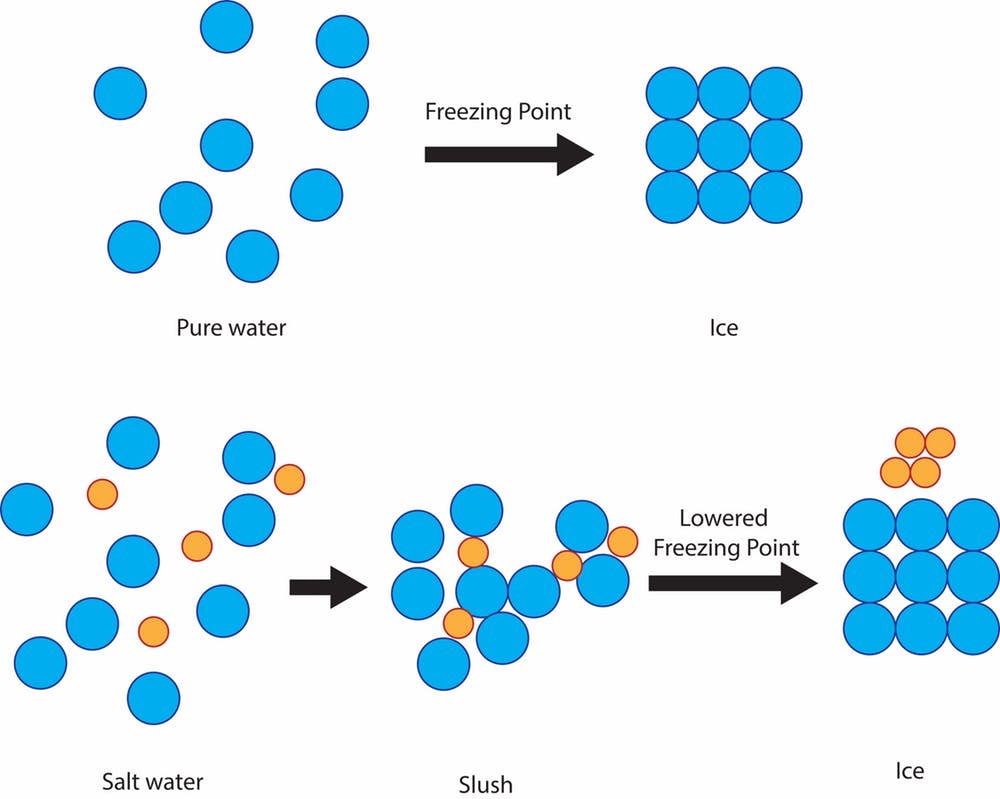
If the water is mixed with salt, though, the freezing temperature of the solution is lower than 32 F. The salt impedes the ability of the water molecules to form solid ice crystals. The degree of freezing point depression depends on how salty the solution is.
It’s important to note that the salt must be in a solution with liquid water in order for this principle to be obeyed. That’s why many cities spray a salt solution before any ice forms

Writing
You've received a letter from your English pen-friend in which he/she writes to you about his/her last journey and complains about his/her travelling companion. Write a letter to your pen-friend in which you tell him/her
- where you travelled last time and who was/were your travelling companion/ companions;
- what kind of travelling companion you prefer and why;
- give some pieces of advice on how to avoid conflicts with a travelling companion when you travel.
Write a letter of at least 100 words. Do not write your own name, any dates, addresses or other personal information. Start your letter in an appropriate way.


Комментариев нет:
Отправить комментарий