https://www.englisch-hilfen.de/en/complex_tests/present_perfect1/index.php
https://www.englisch-hilfen.de/en/complex_tests/simple_past1/index.php
it’s a cheap and effective way to protect roads from ice due to a simple scientific principle: freezing point depression of solutions. The freezing point of pure water, the temperature at which it becomes ice, is 32 degrees Fahrenheit. So if there’s snow, sleet or freezing rain and the ground is 32 F or colder, solid ice will form on streets and sidewalks.
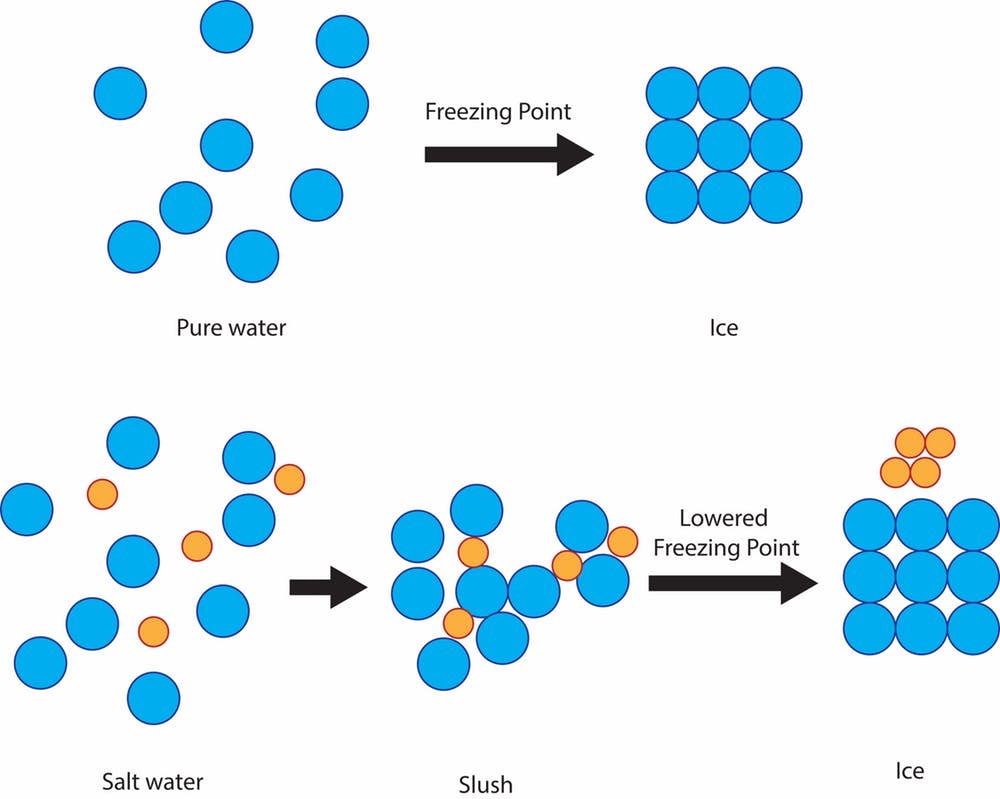
If the water is mixed with salt, though, the freezing temperature of the solution is lower than 32 F. The salt impedes the ability of the water molecules to form solid ice crystals. The degree of freezing point depression depends on how salty the solution is.
It’s important to note that the salt must be in a solution with liquid water in order for this principle to be obeyed. That’s why many cities spray a salt solution before any ice formsWriting
You've received a letter from your English pen-friend in which he/she writes to you about his/her last journey and complains about his/her travelling companion. Write a letter to your pen-friend in which you tell him/her
- where you travelled last time and who was/were your travelling companion/ companions;
- what kind of travelling companion you prefer and why;
- give some pieces of advice on how to avoid conflicts with a travelling companion when you travel.
Write a letter of at least 100 words. Do not write your own name, any dates, addresses or other personal information. Start your letter in an appropriate way.


Комментариев нет:
Отправить комментарий